Early Career Research / transboundary water disputes: the Disi Aquifer in Jordan
Jordan / Disi Muddawwara Aquifer : transboundary dispute between Jordan and Saudi Arabia. Research work between 2001 and 2008 under the supervision of Prof. Eugenia Ferragina from CNR ISSM Napoli , Italy. Output: Research Paper published in 2008 for Water International "The Disi Acquifer: internal external analysis ".
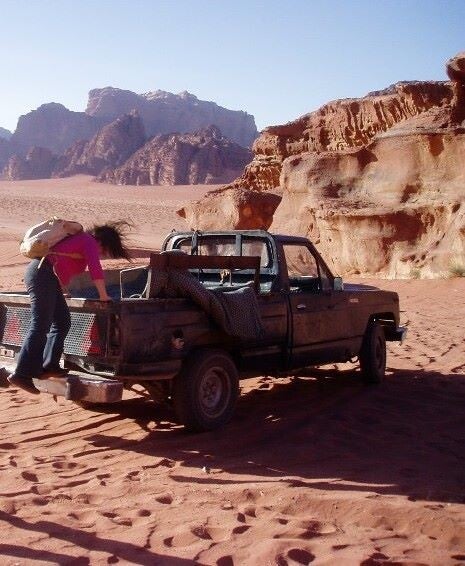
Fieldwork in Jordan 2002-2008 / different missions with CNR Italy ( National Resarch Council of Italy)
In January 2002 I was awarded the Regione Umbria award for "Degree Thesis Abroad". This small award and a second award from Bologna University ( MAE/CRUI intern award) allowed me to get a position as a intern at the Embassy of Italy in Amman, Jordan. These two awards allowed me the right amount of time to explore the desert down to the border with Saudi Arabia while, at the same time, interviewing key-stakeholder in the capital city of Amman, regarding the non-renewable aquifer Disi Muddawwara. My point was about a silent dispute going on between the two countries and the lack of an international agreemen accordint to International Water Law. Jordan and Saudi Arabia eventually signed a bilateral treaty on the shared management of the Disi water . Several other missions until 2008 under the supervision of professor Eugenia Ferragina ( CNR National Research Council of Italy) brought me to the final publication regarding the transboundary aquifer Disi for the academic review "Water International ".
UNESCO Accra, Ghana 2005/2006
After my experience in the Middle East I was selected as a UN Volunteer for the UNESCO Cluster Office for Benin, Ivory Coast, Ghana and Togo . I accomplished my one year mission in Accra, Ghana, working on a WASH and WATER sector knowledge management for the entire UN agencies based in Ghana. I trained myself in WAHS (water health and sanitation) and current campaigns being held in Ghana by UNDP. I also worked on material and non-material heritage of UNESCO Ghana.
2003-2021
The London Water Research Group and the Hydro Hegemony Workshops
Read here some of the presentations I gave at the various "London Water Research Group" events and gatherings and at the HydroHegemony Workshops throughout time (from 2003 onwards).


UNESCO WWAP World Water Assessment Programme of the United Nations ( 2011-2018)
1) Scientific coordinator and editor of the first edition of the Sex -Disaggregated Toolkit for Water Monitoring Assessment and Reporting.
See more in details:
Toolkit Sex-disaggregated indicators for water assessment, monitoring and reporting (1&2): English, Français, Español (pdf) Guidelines on how to collect sex-disaggregated water data (3, pdf) Questionnaire for collecting sex-disaggregated water data (4, pdf) UN-WWAP UNESCO Project on Gender Sensitive Water Monitoring Assessment and Reporting
2) Gender Focal Point for gender mainstreaming of UNESCO/Water project
3) Gender focal point ofr gender mainstreaming of UNESCO /Water publications
4) regional monitoring of Transboundary Aquifers ( UNESCO IGRAC GGRETA project)
5) Outreach and Communication events
6) Webinar and Workshop convenor
7) Coordination of the UNESCO WWAP Gender and Water International Group of Expert
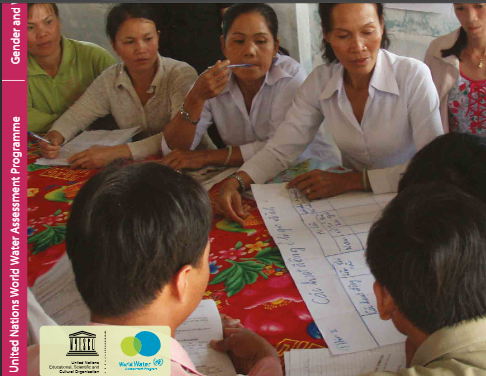


2015 : Groundwater Resources Governance in Transboundary Aquifers (GGRETA) Project PHASE 1 and PHASE 1 ( on behalf of UNESCO World Water Assessment Programme / role: Gender and Water Officer
I acted as a Gender And Water Officer in the Phase 1 and Phase 2 of the GGRETA project.
BACKGROUND
This project has been executed within the framework of the Swiss Agency for Development and Cooperation (SDC) “Global Programme Water Initiatives (GPWI) – Water Diplomacy” activities, UNESCO International Hydrological Programme (IHP) has been entrusted to undertake a project entitled “Groundwater Resources Governance in Transboundary Aquifers (GGRETA)”. The GGRETA project
Phase 1 (2013-2015) aimed at conducting a detailed multi-disciplinary study of transboundary aquifers in three selected case studies. The three transboundary aquifers selected are:
--the Pretashkent Aquifer (Kazakhstan and Uzbekistan),
--the Stampriet Transboundary Aquifer System – STAS (Botswana, Namibia and South Africa),
--the Trifinio Aquifers Complex (El Salvador, Honduras and Guatemala).
GGRETA PROJECT OBJECTIVES AND MAIN ACHIEVEMENTS
The main goal of the project is to enhance cooperation on water security, prevent transboundary and water-use conflicts, and improve overall environmental sustainability. The project aims to reinforce the capacity of Member States in managing groundwater resources; strengthen cooperation among countries sharing the aquifer; and develop a long term strategy for the monitoring and governance of the transboundary aquifer.
---Gender sensitive data was collected in the field and will provide substantial information of innovative topics, such as women and men's roles in water decisionmaking, water use, irrigation techniques. To know more: read the document below